


Artificial Intelligence in Colposcopy: Diagnostic Performance, Clinical Applications, and Future Directions
DOI:
https://doi.org/10.14740/aicm16Keywords:
Artificial intelligence, Colposcopy, Cervical intraepithelial neoplasia, Cervical cancer, Deep learning, Diagnostic accuracyAbstract
Background: Colposcopy is a key diagnostic procedure in cervical cancer prevention but is limited by interobserver variability and suboptimal diagnostic accuracy. Artificial intelligence (AI), particularly deep learning–based image analysis, has emerged as a potential adjunct to improve the detection of high-grade cervical lesions. The objective was to review current evidence on the application of AI in colposcopy, with a focus on technical approaches, diagnostic performance, clinical validation, and challenges for implementation in routine practice.
Methods: A narrative review informed by PRISMA principles was conducted. PubMed, Embase, and the Cochrane Library were searched for studies evaluating AI-assisted analysis of colposcopic images. Eligible studies reported diagnostic performance outcomes for the detection of cervical intraepithelial neoplasia grade 2 or higher (CIN2+). Study selection is summarized using a PRISMA flow diagram.
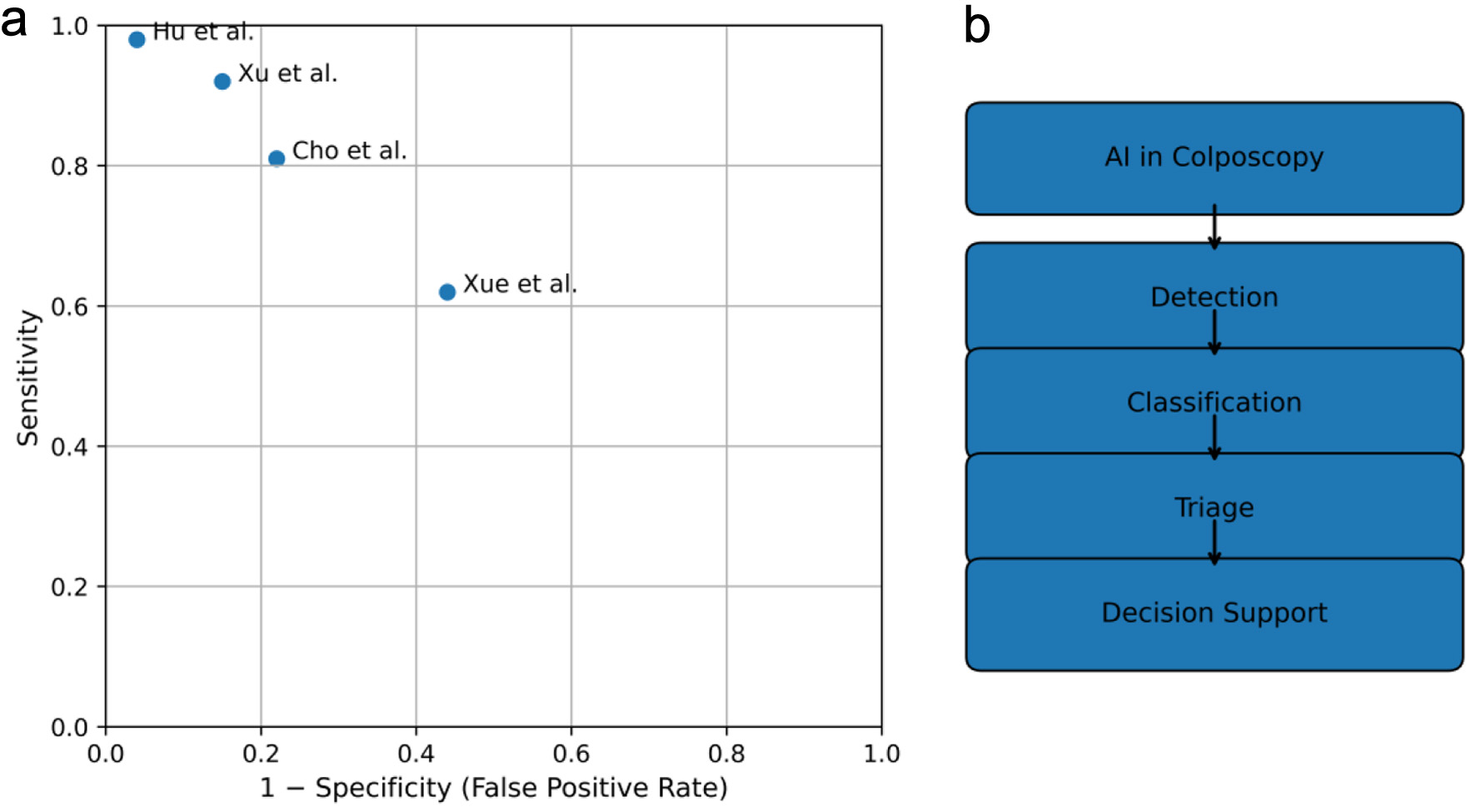
Results: Most included studies employed convolutional neural network–based models trained on labeled colposcopic image datasets. Reported sensitivities for CIN2+ detection ranged from approximately 62% to over 98%, with specificities between 56% and 98%. Several studies demonstrated diagnostic performance comparable to or exceeding that of experienced colposcopists, particularly in terms of sensitivity. A recent meta-analysis reported pooled sensitivity and specificity of approximately 93% and 85%, respectively.
Conclusions: AI-assisted colposcopy shows considerable promise as a tool to enhance diagnostic accuracy and reduce variability in cervical cancer prevention. However, heterogeneity among studies, limited external validation, and challenges related to explainability and clinical integration highlight the need for robust prospective studies before widespread implementation can be recommended.
Published
Issue
Section
License
Copyright (c) 2026 The authors

This work is licensed under a Creative Commons Attribution 4.0 International License.